

Understanding Asphalt Pricing: How to Navigate Bid Volatility and Protect Your Budget
You’re sitting at your desk with three different bids for your commercial parking lot project. One seems suspiciously low, one is astronomical, and the middle one is... well, it’s still higher than what you paid three years ago. If you feel like the ground is shifting under your feet before we even bring in the excavators, you’re not alone.
In the world of property management, asphalt pricing can feel like a high-stakes shell game. One month you’re quoted X, and by the time the board approves the budget, the price has jumped 15%. At Pacific Asphalt and Excavation, we believe the best partnerships are built on transparency. You deserve to know why those numbers move, what’s actually happening behind the scenes at the refinery, and how you can protect your bottom line from the "surprise" surcharges that plague our industry.
🛢️ The Liquid Gold: Why Oil Runs Your Parking Lot
To understand asphalt pricing, you have to look at the bottom of the barrel, literally. Asphalt isn't just "black rocks"; it’s a mixture of stone aggregate and liquid asphalt cement (bitumen). That liquid binder is a byproduct of the crude oil refining process.
When you see gas prices at the pump tick upward on your morning commute, it’s a safe bet that your paving costs are following suit. Liquid asphalt is significantly more volatile than other construction materials. In fact, research shows it can be up to four times more volatile than concrete. While cement prices might fluctuate by a modest 2% over a season, asphalt can swing by 40% in a single year.
This volatility is the primary reason most contractors include a "shelf life" on their bids. When we hand you a quote, we’re often working against a 15-to-30-day window. Beyond that, the cost of the raw materials is anyone's guess.
📉 The Hidden "Escalator Clause" Trap
Here is something many contractors won't volunteer during the initial handshake: the Asphalt Cost Escalator Clause.
In many large-scale or public works contracts, these clauses allow a contractor to raise their price after the bid is won if the cost of liquid asphalt spikes. While this protects the contractor's margins, it can leave a property owner with a massive budget shortfall they didn't see coming.
At Pacific Asphalt and Excavation, we handle this differently. We aim for transparency from day one. We’ve seen projects where the price rose nearly 12% between the initial handshake and the first day of paving. Our goal is to work with you to lock in pricing or, at the very least, provide a "trigger price" analysis so you aren't blindsided. If a contractor hands you a bid that seems too good to be true and lacks a clear expiration date, check the fine print for an escalation clause. They might be planning to make up that "discount" later.
🏗️ Supply, Demand, and the Regional Bottleneck
Asphalt is a regional product. Unlike steel or lumber, which can be shipped across the country with relative ease, hot-mix asphalt has a ticking clock. It needs to be delivered and laid while it's still hot: usually between 275°F and 300°F. This means your pricing is heavily dictated by the nearest asphalt plant and the local supply chain.
Regional constraints play a huge role:
Refinery Maintenance: If a regional refinery goes offline for "turnaround" or maintenance, the local supply of bitumen drops, and prices skyrocket overnight.
Transportation Costs: Diesel fuel isn't just for the trucks; it powers the pavers, the rollers, and the plants themselves. When diesel goes up, your "per-ton" cost goes up.
Seasonal Surges: In our neck of the woods, asphalt plants often have a "season." When they first open in the spring, everyone is clamoring for a spot on the schedule. This peak demand naturally drives up the cost of labor and materials.
🗓️ Timing Your Project to Save Your Budget
If you want to beat the volatility, you have to understand the calendar. Project timing is perhaps the single biggest lever a property owner can pull to affect the bottom line.
The Early Bird Strategy: Most property managers wait until the first potholes appear in late spring to start calling for bids. By then, our schedules are filling up, and plant prices are at their peak. If you start your planning process in the winter: while the ground is still frozen or the rain is heavy: you can often secure "early season" rates.
The Fall Rush: Conversely, trying to squeeze in a project in late October or November can be a gamble. Weather delays can push a project into the next year, and you’ll be subject to whatever the new year’s material costs look like.
If you're unsure whether you need a full overhaul or just some strategic maintenance, check out our guide on asphalt repair vs replacement. Knowing the difference can save you thousands in unnecessary material costs.
🛡️ Protecting Yourself from Bid Volatility
So, how do you navigate a market where prices change faster than the weather? Here are a few insider tips we share with our long-term partners:
Ask for the "Mix Design": Not all asphalt is created equal. Some mixes use more recycled content (RAP), which can be cheaper but may have different longevity profiles. Ensure you’re comparing apples to apples.
Request a Fixed-Price Window: Ask your contractor exactly how long the price is guaranteed. If they can’t give you at least 30 days, ask why.
Check for "Add-Ons": Does the bid include mobilization, striping, and permit fees? Or are those "hidden" costs that will appear on the final invoice?
Leverage Preventive Maintenance: The best way to avoid asphalt price volatility is to use less asphalt. Regular sealcoating and crack filling extend the life of your pavement, delaying that massive resurfacing bill by years.
🤝 The Pacific Asphalt and Excavation Standard
We’ve been in this business long enough to know that nobody likes a surprise on an invoice. Whether we’re working on a sprawling retail center or a private driveway, our approach to bidding is rooted in the Pacific Asphalt and Excavation way: professional, transparent, and direct.
We don't hide behind technical jargon or volatile market excuses. If the price of liquid asphalt is climbing, we’ll tell you exactly how it impacts your project and offer alternatives: like phasing the work or adjusting the mix: to stay within your budget. We take pride in our high-quality paving work, and that starts with an honest conversation about the numbers.
🧱 Don't Let the Market Dictate Your Quality
Budgeting for a major paving project is stressful enough without the added weight of market volatility. By understanding the "why" behind the numbers: the oil markets, the regional supply chains, and the timing of the plants: you can make a more informed decision for your property.
Remember, the cheapest bid isn't always the best value, especially if it includes "hidden" escalation clauses that shift the risk entirely onto your shoulders. Look for a partner who understands the local geography, the regional pricing trends, and most importantly, your specific needs as a property owner.
Ready to take the guesswork out of your next project? We’re here to help you navigate the complexities of the current market. From detailed site evaluations to transparent, competitive bidding, we’ll make sure your property is set for years to come.
Ready to break ground?
If you’re planning a project for 2026 and want a transparent look at what your budget can actually achieve, we’d love to chat. You can browse our full list of services, or reach out and we’ll walk through your scope, timing, and the current material pricing—no guesswork.
Let’s get your project on the books before the next market shift. Contact Pacific Asphalt and Excavation to schedule a consultation that respects both your property and your bottom line.
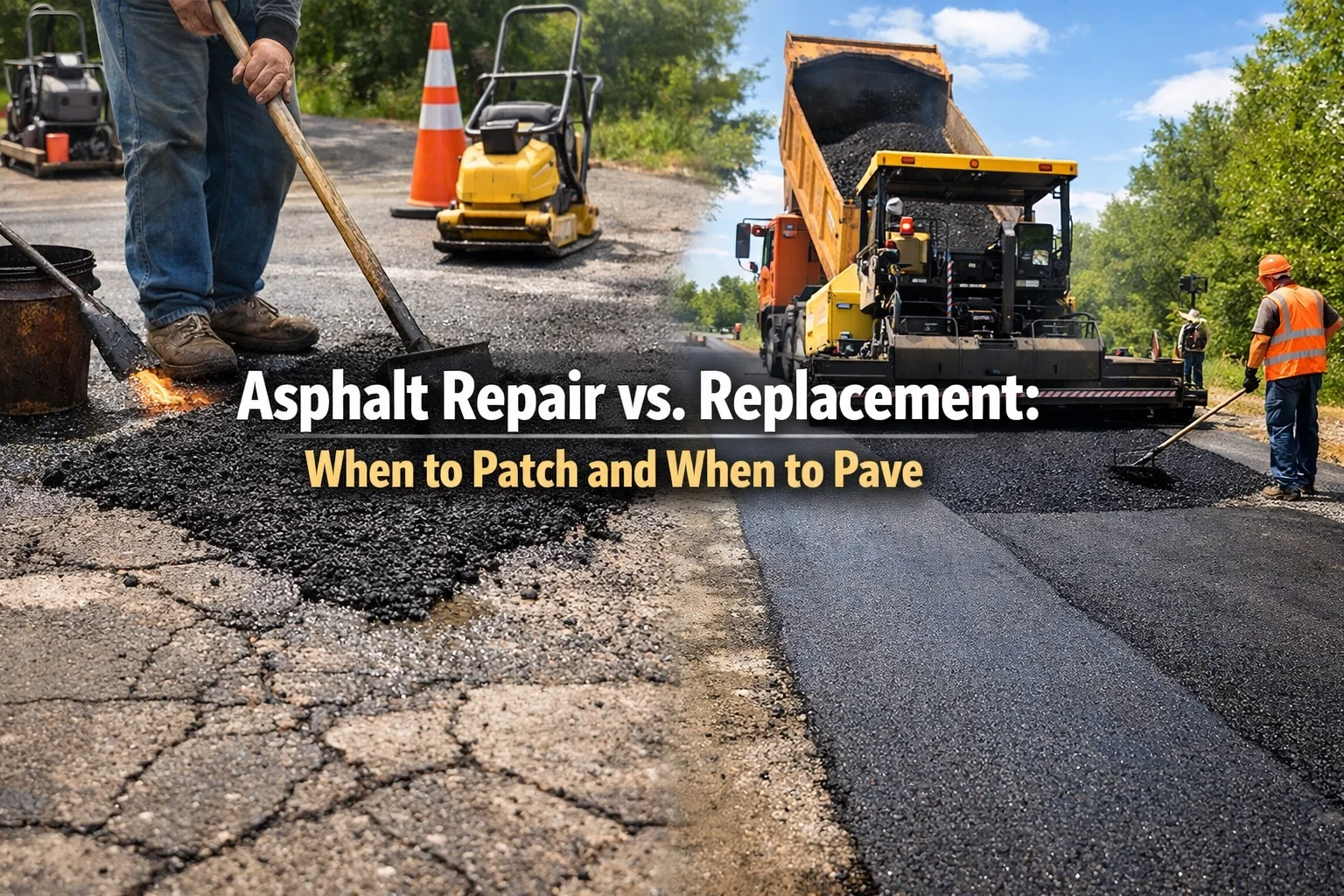
Asphalt Repair vs. Replacement: When to Patch and When to Pave
Asphalt Repair vs. Replacement: When to Patch and When to Pave.
It’s March here in the Pacific Northwest, and if you’ve spent any time walking your property lately, you’ve likely seen the aftermath of the winter freeze-thaw cycle. Your driveway or parking lot is the first thing a visitor notices: it’s essentially the "handshake" of your property. When that handshake feels like a series of jarring bumps and crumbling edges, it’s time to make a decision.
At Pacific Asphalt and Excavation, we get the call every spring: "Do I just need a quick patch, or am I looking at a total teardown?"
The answer isn't always written in the cracks. Deciding between asphalt repair and full replacement requires a look beneath the surface. While a quick patch might save your budget this month, ignoring structural failure can lead to an expensive disaster by next year. We want to help you understand the technical nuances of when to repair, when to resurface, and when to bring in the heavy equipment for a full excavation and repave.
🏗️ The Foundation: Why Subgrade and Drainage Rule Everything
Before we talk about the black stuff on top, we have to talk about what’s underneath. At Pacific Asphalt and Excavation, we believe that an asphalt surface is only as good as the ground it sits on.
The Role of Subgrade Compaction
The subgrade is the native soil that has been prepared and compacted to support the pavement. If your subgrade wasn't properly compacted during the initial installation, the asphalt will eventually sink, regardless of how thick the top layer is. This leads to "rutting" or localized depressions. When we perform excavation for a new project, we prioritize mechanical compaction to ensure the earth is rock-solid. Without it, you’re just building on a sponge.
Drainage: The Silent Pavement Killer
Water is the natural enemy of asphalt. If your property doesn't have proper drainage: meaning the water doesn't move away from the pavement: it will seep into the subbase. Once there, it softens the foundation. In colder months, that trapped water freezes and expands, pushing the asphalt upward and creating those massive potholes we all love to hate.
If you notice standing water on your driveway or lot, you don't just have a surface problem; you have a drainage problem. Pacific Asphalt and Excavation often finds that fixing the "pavement" actually requires re-grading the area to ensure water flows toward a catch basin or away from the structure.
🛠️ When Simple Asphalt Repair is the Right Move
Sometimes, the damage looks worse than it actually is. If your pavement is relatively young (under 10 years) and the issues are localized, asphalt repair is your best friend. This is the surgical approach: fix the specific wound without operating on the whole body.
Potholes: These are usually caused by localized water penetration. As long as the surrounding area is stable, we can cut out the damaged section, clear the debris, and apply a high-quality patch.
Minor Cracking: Hairline cracks (less than 1/4 inch wide) are common. At Pacific Asphalt and Excavation, we recommend crack sealing to prevent water from reaching the subbase. It’s an affordable way to add years to your pavement’s life.
Isolated "Birdbaths": If you have one small dip where a puddle forms but the rest of the lot is high and dry, a surface patch or a localized "skim patch" can level things out.
The general rule of thumb we use at Pacific Asphalt and Excavation is the 30% Rule. If less than 30% of the total surface area is damaged, a repair or a series of patches is usually the most cost-effective solution.
🚧 The Middle Ground: Resurfacing (Milling and Overlay)
What if the surface looks terrible: faded, rough, and covered in small cracks: but the structure is still sound? This is where resurfacing comes in.
Resurfacing, or an "overlay," involves milling down the top layer of the existing asphalt and laying a fresh 1.5 to 2-inch layer over the top. It’s essentially a facelift for your property.
You should consider resurfacing if:
The foundation and sublayers are undamaged and stable.
The asphalt is between 12 and 18 years old.
The damage is aesthetic or limited to the very top layer.
You haven't already had multiple overlays (adding too many layers can create drainage issues and "lip" problems at transitions).
Pacific Asphalt and Excavation often recommends this for commercial parking lots where a brand-new look is needed for curb appeal, but a full excavation isn't justified by the budget. You can learn more about our specific approaches to these projects on our About page.
🚜 When to Opt for Full Replacement and Excavation
There comes a point where patching is just throwing good money after bad. If you find yourself calling us for asphalt repair every single spring, you’re likely dealing with a terminal case of pavement failure.
Warning Signs for Total Replacement:
Alligator Cracking: This looks exactly like it sounds: a series of interconnected cracks that resemble the skin of an alligator. This is a definitive sign of structural failure. It means the subbase can no longer support the weight of the traffic above it.
Advanced Age: Asphalt typically has a lifespan of 20 to 25 years in our climate. If your pavement is celebrating its 30th birthday, it’s time to retire it.
Widespread Damage: If more than 30% of the surface is compromised, the labor costs of patching will quickly approach the cost of a full repave.
Major Subbase Issues: If the entire driveway is shifting or sinking, no amount of surface work will fix it. We need to dig it up.
When Pacific Asphalt and Excavation handles a full replacement, we don't just "pave over." We perform a full excavation of the old material. We then inspect the subgrade, add new crushed rock where necessary, compact it to a high density, and ensure the slope is perfect for drainage. Only then do we lay the new asphalt.
💰 Cost vs. Longevity: The Property Owner’s Dilemma
As a manager or property owner, the budget is always top of mind. We get it. However, we like to look at the "Cost Per Year" of the pavement.
Patching/Repair: Low upfront cost, but short lifespan (1-3 years). If the root cause isn't fixed, you'll repeat this annually.
Resurfacing: Moderate cost, adds 8–12 years to the life of the pavement.
Replacement: High upfront cost, but provides a 20–30 year solution.
By investing in a full replacement when it's truly needed, you eliminate the constant maintenance headache and significantly increase the value of your property. For developers looking at long-term holdings, the full driveway paving or lot replacement is almost always the better financial move over a 20-year horizon.
🏠 Residential Considerations: Driveway Paving
For homeowners, the stakes are often personal. A crumbling driveway isn't just a trip hazard; it’s a drag on your home’s value. When we handle driveway paving at Pacific Asphalt and Excavation, we treat it with the same technical rigor as a commercial highway.
We see many homeowners try to DIY their asphalt repair with "cold patch" bags from a big-box store. While this is fine for a temporary fix in a small pothole, it won't bond permanently to the existing pavement. Our professional hot-mix asphalt creates a seamless, durable bond that stands up to heavy SUVs and the constant rain we see in this region.
If you’re wondering where your driveway stands, check out our FAQ page for more details on what to expect during a paving project.
🏁 Partnering with Pacific Asphalt and Excavation
Choosing between repair and replacement doesn't have to be a guessing game. It requires an honest assessment of what’s happening underground.
At Pacific Asphalt and Excavation, we take pride in giving you the straight story. If a patch will get you through the next five years, we’ll tell you. If your subgrade is failing and a patch is a waste of money, we’ll tell you that too. We’ve built our reputation on being a trusted partner for property owners across the region, from small residential driveways to massive commercial developments.
Whether you're dealing with a single stubborn pothole or planning a massive new development that requires expert excavation and driveway paving, our team is equipped to handle the job with precision and professionalism.
Ready to figure out the best path forward for your pavement? We’d love to take a look at your project. You can reach out to us directly through our Contact page or explore more of our recent work on the Pacific Asphalt and Excavation blog. Now is the time to act: before the next heavy rain turns that small crack into a big problem.
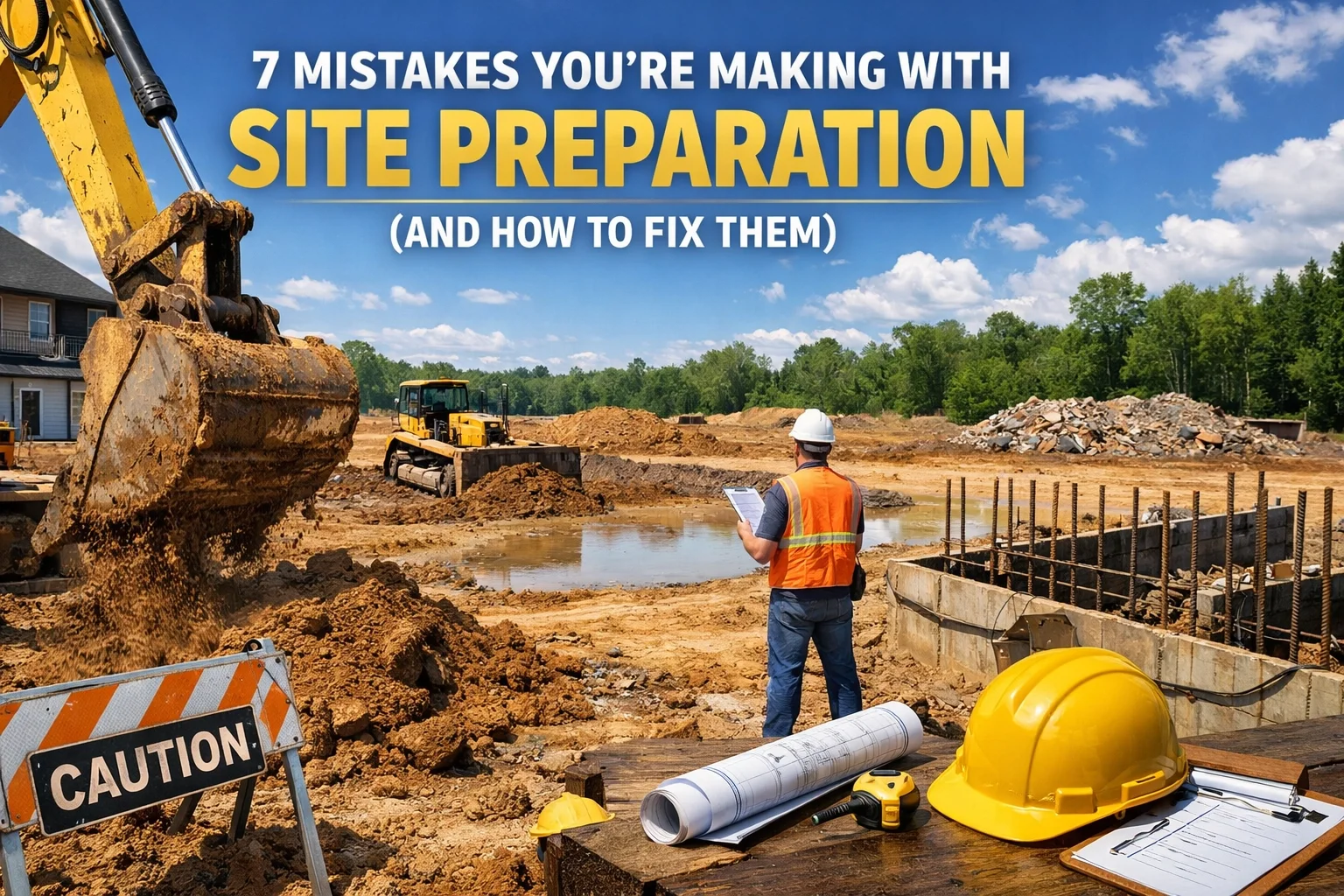
7 Mistakes You’re Making with Site Preparation (and How to Fix Them)
7 Mistakes You’re Making with Site Preparation (and How to Fix Them)
You’ve finally decided to pull the trigger on that new commercial lot, a custom home foundation, or a sprawling new driveway. It’s an exciting phase. You’re looking at blueprints, picking out finishes, and imagining the final result. But before the first load of asphalt arrives or the concrete truck pulls into the lane, there is a phase that determines whether your investment lasts twenty years or twenty months: site preparation.
At Pacific Asphalt and Excavation, we like to say that a project is only as good as the ground it stands on. You can buy the highest-grade asphalt in the world, but if the dirt underneath isn't ready for it, that surface is going to crack, sink, or wash away. Site prep is the "invisible" part of construction, but it’s where the most expensive mistakes happen.
If you’re planning a project in the Pacific Northwest, you know our environment is unique. Between the heavy rainfall and the varied soil types, "standard" prep doesn't always cut it. We’ve seen plenty of DIY attempts and "budget" contractor jobs go south because someone tried to save a few dollars on the foundation.
Here are the seven most common site preparation mistakes we see and, more importantly, how we work to fix them.
1. Thinking Gravity Will Do All the Work (Poor Drainage Planning) 🌧️
Water is the absolute enemy of pavement. If water gets under your asphalt and stays there, it softens the subgrade, leading to "alligator cracking" and total surface failure.
The Mistake: Designing a site that looks flat to the naked eye but has no plan for where rainwater goes. Inadequate drainage results in pooling, erosion, and long-term water damage to foundations.
The Fix: Every site needs a comprehensive drainage strategy. We work with civil engineers to map existing topography and ensure a minimum slope of 2–5% away from all structures. This might include:
Installing French drains or catch basins.
Creating swales to direct runoff.
Integrating stormwater drainage channels into the initial design.
If you want to see how we handle complex layouts, check out our about page to learn more about our technical approach to site engineering.
3. Cutting Corners on Subgrade Compaction 🚜
If the soil isn't packed down tight, it will eventually pack down under the weight of your cars, trucks, or buildings. This leads to "settling," which is just a polite word for your driveway sinking.
The Mistake: Moving earth around until it looks level, then immediately paving over it. Without proper compaction, air pockets remain in the soil. Over time, moisture and weight collapse those pockets.
The Fix: This is where Pacific Asphalt and Excavation truly shines. High-quality foundational work requires precision grading and heavy-duty compaction equipment. We don't just roll over the dirt once; we test for compaction density to ensure the subgrade is rock-solid. We follow strict site levels based on your architectural plans, ensuring the surface is ready for the "heavy haul" loads it will eventually carry.
4. Leaving "Organics" in the Ground (Inadequate Site Clearance) 🌳
It’s tempting to just grind down a stump and call it a day, or to leave a few layers of old sod under the new fill dirt. This is a recipe for disaster.
The Mistake: Leaving tree roots, stumps, or construction debris buried in the site. As organic matter like wood and grass decomposes, it creates voids in the earth. Eventually, the ground above those voids collapses.
The Fix: Thorough clearance is non-negotiable. We remove all obstacles down to the root level. This means "grubbing" the site: stripping away the topsoil and organic layers until we hit stable, inorganic material. It's a messy process, but it's the only way to guarantee a stable surface.
5. Playing "Guess Where the Pipe Is" (Skipping Utility Locates) ⚡
Nothing kills a project timeline (or a budget) faster than a backhoe ripping through a fiber-optic line or a water main.
The Mistake: Assuming you know where the lines are because "the previous owner said so." Striking a utility line can lead to massive fines, dangerous injuries, and weeks of delays.
The Fix: We follow a "safety-first" protocol on every job. This means calling for professional utility locates before a single bucket of dirt is moved. We map out water, sewer, power, and gas lines early in the planning phase. If you're unsure about the requirements in your area, our FAQ covers many of the common regulatory questions we encounter.
6. Ignoring the "Boring" Legal Stuff (Permits and Inspections) 📄
We get it: nobody likes paperwork. But starting an excavation project without the right permits is a gamble that rarely pays off.
The Mistake: Starting construction without checking zoning, environmental, or excavation approvals. Local authorities have the power to halt your project or even force you to remove work that isn't up to code.
The Fix: Consult local authorities early. At Pacific Asphalt and Excavation, we’re familiar with the regional regulatory landscape. We help ensure all necessary NOCs (No Objection Certificates) and permits are in hand before we break ground. It’s about doing it right the first time so you don't have to do it twice.
7. Hiring Based on the Lowest Bid Alone 💸
We all want a good deal. But in the world of excavation and paving, a low bid often means the contractor is skipping one of the six steps mentioned above.
The Mistake: Hiring unlicensed or inexperienced labor because they gave you the lowest number. If they aren't testing soil, skipping the compaction phase, or ignoring drainage, you aren't saving money: you’re just deferring a much larger bill for repairs.
The Fix: Look for a reputable excavation contractor with a track record of high-quality foundational work. You want a partner who explains why they are charging for subgrade preparation, not one who tries to hide those costs.
As a premier driveway paving specialist, we pride ourselves on transparency. We show you the work being done at every layer, from the raw earth to the final smooth finish.
The Pacific Asphalt and Excavation Difference
Site preparation isn't just about moving dirt; it's about engineering a foundation that can withstand the test of time and the brutal Pacific Northwest weather. Whether you are looking for a new commercial parking lot or a custom residential driveway, the prep work is where the battle is won.
We focus on the technical details: the things you won’t see once the asphalt is cured but will definitely feel twenty years from now when your surface is still level and puddle-free. From the busy retail centers of Olympia to rural residential estates, we bring the same level of precision to every square foot.
Ready to break ground?
Don't let a "simple" site prep mistake turn into a costly nightmare. We’ve got the equipment, the experience, and the local knowledge to handle your next project with the care it deserves. If you have questions about your specific site conditions or want to get a professional eyes on your project, contact us today. We can't wait to hear from you and help turn your vision into a rock-solid reality.
For more tips on maintaining your new surfaces, feel free to browse our blog or return to our homepage to see our full range of services. Now is the time to act( let's build something that lasts.)
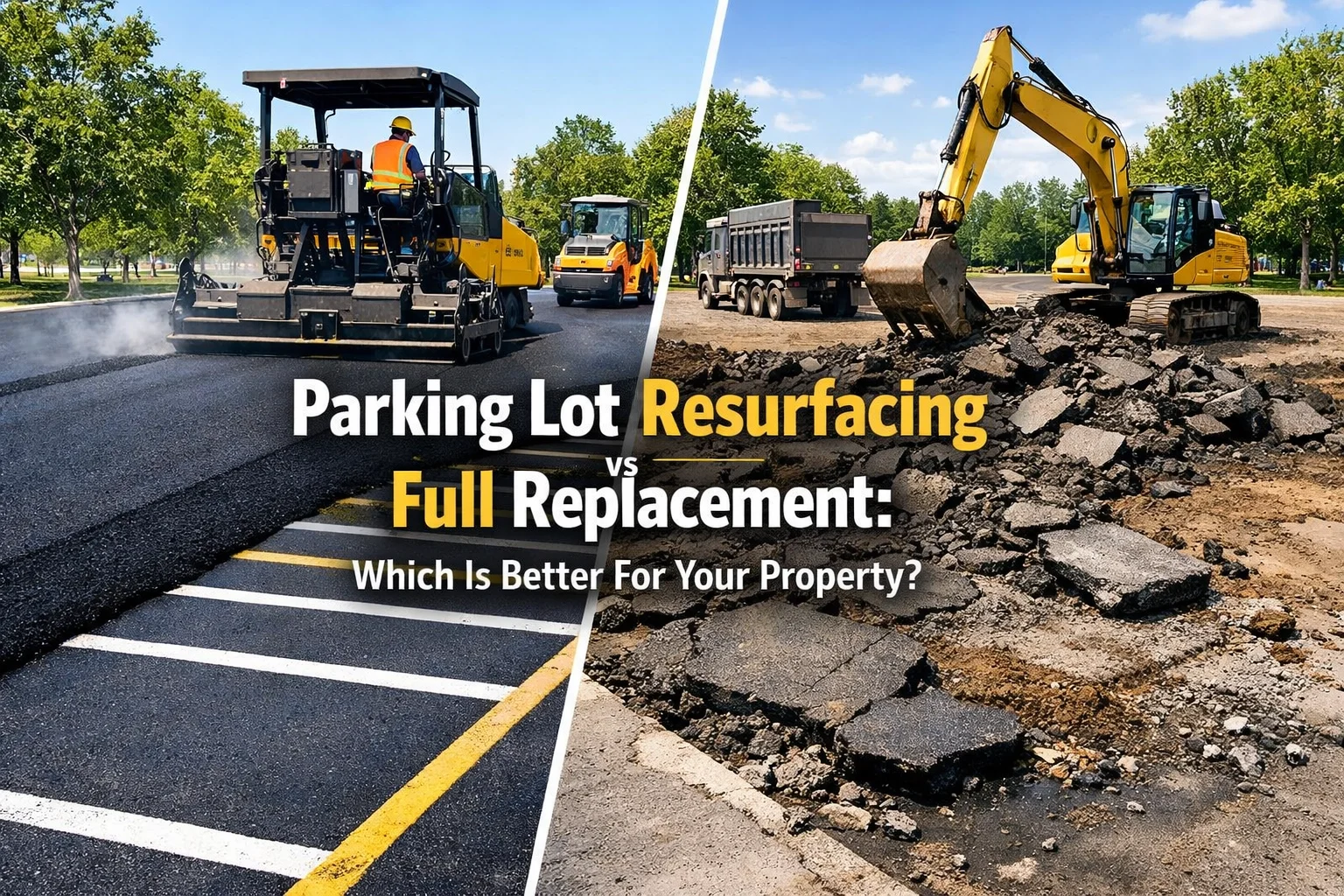
Parking Lot Resurfacing vs. Full Replacement: Which Is Better For Your Property?
Walking out to your commercial property in the morning, the first thing you notice shouldn't be a massive pothole or a web of cracks that looks like a map of the Cascades. But here in the Pacific Northwest, the weather isn't exactly kind to our infrastructure. Between the heavy rainfall on the Olympic Peninsula and the relentless freeze-thaw cycles we see throughout the region, asphalt takes a beating.
At Pacific Asphalt and Excavation, we hear the same question from property managers and business owners almost every week: "Do I really need to rip the whole thing out, or can we just put a fresh layer on top?"
It’s a fair question. Your parking lot is often the very first impression a customer has of your business. A smooth, dark, well-striped lot says you care about the details. A crumbling, puddle-filled mess says... well, something else entirely. Choosing between resurfacing (an overlay) and a full replacement isn’t just about the budget today; it’s about the ROI for the next twenty years.
Let’s break down the technical side of asphalt management so you can make the right call for your property.
The Quick Fix: What is Parking Lot Resurfacing?
Resurfacing, often called an "overlay" in the industry, is essentially a high-end facelift for your pavement. If your parking lot has a foundation that is still structurally sound but the surface is starting to look grey, weathered, or has minor surface-level cracking, this is likely your best bet.
During a resurfacing project, we typically mill down the existing asphalt around the edges: drains, curbs, and transitions: to ensure the new layer sits flush. Then, we apply a tack coat (a specialized liquid asphalt glue) and lay down a fresh 1.5 to 2-inch "lift" of new hot-mix asphalt.
The Pros:
Cost-Effective: Typically runs between $2 and $4 per square foot.
Speed: We can usually get in and out in 1–3 days, meaning minimal disruption to your tenants or customers.
Aesthetic: It looks brand new once the striping is down.
The Cons:
Lifespan: You’re looking at about 8–15 years of additional life.
Risk: If there are underlying issues in the subgrade, those cracks will reflect through the new surface in just a couple of seasons.
The Deep Dive: When Full Replacement is Non-Negotiable
Sometimes, a fresh coat of paint won't fix a house with a cracked foundation. The same logic applies to your parking lot. If more than 25-30% of your lot is covered in "alligator cracking": those interconnected cracks that look like reptile skin: it’s a signal that the subgrade has failed.
Full replacement involves the heavy machinery. At Pacific Asphalt and Excavation, we handle the entire process: ripping out the old asphalt, hauling it away, and most importantly, evaluating the dirt and rock underneath.
Why Site Preparation is Our Obsession
As expert asphalt paving contractors, we know that the "black stuff" on top is only as good as the "brown stuff" underneath. Proper site preparation is where most contractors cut corners, but it’s where we do our best work.
When we perform a full replacement, we look at:
Subgrade Compaction: If the soil beneath the rock isn't compacted to the right PSI, the lot will sink.
Base Rock Quality: We use high-quality crushed surfacing base top (CSBT) to create a rigid platform.
Proof Rolling: We drive heavy equipment over the base to check for "pumping" or soft spots before a single drop of asphalt is poured.
> Pro Tip: If a contractor offers you a cheap price but doesn't mention "subgrade" or "compaction testing," run. You'll be paying for that same job again in three years.
The Technical "Silent Killers": Subgrade and Drainage
If you ask us to resurface a lot that has standing water every time it rains, we’re going to have a serious talk about drainage. Water is the undisputed enemy of asphalt. When water sits on the surface, it eventually seeps through microscopic cracks into the subgrade. In the winter, that water freezes, expands, and pushes the asphalt up. In the summer, the void left behind collapses, creating a pothole.
The Drainage Test
Before deciding on resurfacing vs. replacement, we look at the "slope." A parking lot needs a minimum 1-2% grade to shed water effectively. If your lot has settled over the years and created "birdbaths" (those shallow puddles that never seem to go away), a simple overlay won't fix the pitch.
In these cases, Pacific Asphalt and Excavation might recommend a partial replacement or a "wedge and level" process. However, if the drainage issues are systemic across the whole site, a full replacement allows us to re-grade the entire area, ensuring water flows toward catch basins and away from your building’s foundation.
Comparing the Numbers: Short-term vs. Long-term
We understand that budget is always a factor. Managing a commercial property means balancing immediate cash flow with long-term asset value.
If you plan on selling the property in the next 24 months, resurfacing might be the logical choice to boost curb appeal. But if you’re holding the asset for the long haul, the cost-per-year of a full replacement is actually lower because you won't be chasing "alligator cracks" with expensive repairs every spring.
Material Quality Matters
Not all asphalt is created equal. At Pacific Asphalt and Excavation, we are picky about our mix designs. Depending on whether your lot handles light passenger vehicles or heavy delivery trucks (like those Mack dump trucks in our fleet), the asphalt needs different properties.
Heavy-duty areas need a higher stability mix with larger aggregate to prevent "rutting" (the indentations left by tires). For a smooth, dark finish on a retail front, we might use a finer mix that looks pristine and is easier to sealcoat down the road.
3 Signs You Can Save Money with Resurfacing
The cracks are linear: Long, straight cracks are usually caused by thermal expansion. These can be filled and covered with an overlay successfully.
The foundation is rock solid: If we run a 20-ton roller over your lot and it doesn't budge, your subgrade is in great shape.
Good Drainage: If your lot dries quickly after a PNW rainstorm, you’ve won half the battle.
3 Signs You Need to Start Over
Pavement is "Pumping": If you see mud or water being pushed up through cracks when a car drives over, the subgrade is saturated and gone.
Too Many Layers: Asphalt is heavy. You can't just keep adding layers forever without stressing the perimeter drainage and curbs. If you already have two overlays, it’s time to mill it down to the dirt.
Deep Potholes: If a pothole goes all the way through to the dirt, the structural integrity is compromised.
Trust the Foundational Experts
At the end of the day, your parking lot is an investment. We’ve seen too many property owners try to save a few dollars by choosing a "cheap" overlay, only to have the entire surface fail when the first heavy frost hits.
Our team at Pacific Asphalt and Excavation prides itself on being honest. If we think an overlay is a waste of your money, we’ll tell you. We focus on high-quality foundational work because we want our name associated with projects that look just as good ten years from now as they did on the day we finished.
Whether you're managing a retail center in the heart of town or a quiet office park, we handle everything from the initial excavation and site prep to the final, crisp striping of ADA-compliant spaces.
Ready to break ground?
Don't wait until a small crack becomes a liability. Whether you need a quick resurfacing or a total site overhaul, we are here to help you navigate the technical details and find the best solution for your specific property.
Contact us today for a site evaluation, or learn more about our team and our commitment to building things that last. We’d love to take a look at your lot and give you a straight answer on what it really needs.
Walking out to your commercial property in the morning, the first thing you notice shouldn't be a massive pothole or a web of cracks that looks like a map of the Cascades. But here in the Pacific Northwest, the weather isn't exactly kind to our infrastructure. Between the heavy rainfall on the Olympic Peninsula and the relentless freeze-thaw cycles we see throughout the region, asphalt takes a beating.
At Pacific Asphalt and Excavation, we hear the same question from property managers and business owners almost every week: "Do I really need to rip the whole thing out, or can we just put a fresh layer on top?"
It’s a fair question. Your parking lot is often the very first impression a customer has of your business. A smooth, dark, well-striped lot says you care about the details. A crumbling, puddle-filled mess says... well, something else entirely. Choosing between resurfacing (an overlay) and a full replacement isn’t just about the budget today; it’s about the ROI for the next twenty years.
Let’s break down the technical side of asphalt management so you can make the right call for your property.
The Quick Fix: What is Parking Lot Resurfacing?
Resurfacing, often called an "overlay" in the industry, is essentially a high-end facelift for your pavement. If your parking lot has a foundation that is still structurally sound but the surface is starting to look grey, weathered, or has minor surface-level cracking, this is likely your best bet.
During a resurfacing project, we typically mill down the existing asphalt around the edges: drains, curbs, and transitions: to ensure the new layer sits flush. Then, we apply a tack coat (a specialized liquid asphalt glue) and lay down a fresh 1.5 to 2-inch "lift" of new hot-mix asphalt.
The Pros:
Cost-Effective: Typically runs between $2 and $4 per square foot.
Speed: We can usually get in and out in 1–3 days, meaning minimal disruption to your tenants or customers.
Aesthetic: It looks brand new once the striping is down.
The Cons:
Lifespan: You’re looking at about 8–15 years of additional life.
Risk: If there are underlying issues in the subgrade, those cracks will reflect through the new surface in just a couple of seasons.
The Deep Dive: When Full Replacement is Non-Negotiable
Sometimes, a fresh coat of paint won't fix a house with a cracked foundation. The same logic applies to your parking lot. If more than 25-30% of your lot is covered in "alligator cracking": those interconnected cracks that look like reptile skin: it’s a signal that the subgrade has failed.
Full replacement involves the heavy machinery. At Pacific Asphalt and Excavation, we handle the entire process: ripping out the old asphalt, hauling it away, and most importantly, evaluating the dirt and rock underneath.
Why Site Preparation is Our Obsession
As expert asphalt paving contractors, we know that the "black stuff" on top is only as good as the "brown stuff" underneath. Proper site preparation is where most contractors cut corners, but it’s where we do our best work.
When we perform a full replacement, we look at:
Subgrade Compaction: If the soil beneath the rock isn't compacted to the right PSI, the lot will sink.
Base Rock Quality: We use high-quality crushed surfacing base top (CSBT) to create a rigid platform.
Proof Rolling: We drive heavy equipment over the base to check for "pumping" or soft spots before a single drop of asphalt is poured.
> Pro Tip: If a contractor offers you a cheap price but doesn't mention "subgrade" or "compaction testing," run. You'll be paying for that same job again in three years.
The Technical "Silent Killers": Subgrade and Drainage
If you ask us to resurface a lot that has standing water every time it rains, we’re going to have a serious talk about drainage. Water is the undisputed enemy of asphalt. When water sits on the surface, it eventually seeps through microscopic cracks into the subgrade. In the winter, that water freezes, expands, and pushes the asphalt up. In the summer, the void left behind collapses, creating a pothole.
The Drainage Test
Before deciding on resurfacing vs. replacement, we look at the "slope." A parking lot needs a minimum 1-2% grade to shed water effectively. If your lot has settled over the years and created "birdbaths" (those shallow puddles that never seem to go away), a simple overlay won't fix the pitch.
In these cases, Pacific Asphalt and Excavation might recommend a partial replacement or a "wedge and level" process. However, if the drainage issues are systemic across the whole site, a full replacement allows us to re-grade the entire area, ensuring water flows toward catch basins and away from your building’s foundation.
Comparing the Numbers: Short-term vs. Long-term
We understand that budget is always a factor. Managing a commercial property means balancing immediate cash flow with long-term asset value.
If you plan on selling the property in the next 24 months, resurfacing might be the logical choice to boost curb appeal. But if you’re holding the asset for the long haul, the cost-per-year of a full replacement is actually lower because you won't be chasing "alligator cracks" with expensive repairs every spring.
Material Quality Matters
Not all asphalt is created equal. At Pacific Asphalt and Excavation, we are picky about our mix designs. Depending on whether your lot handles light passenger vehicles or heavy delivery trucks (like those Mack dump trucks in our fleet), the asphalt needs different properties.
Heavy-duty areas need a higher stability mix with larger aggregate to prevent "rutting" (the indentations left by tires). For a smooth, dark finish on a retail front, we might use a finer mix that looks pristine and is easier to sealcoat down the road.
3 Signs You Can Save Money with Resurfacing
The cracks are linear: Long, straight cracks are usually caused by thermal expansion. These can be filled and covered with an overlay successfully.
The foundation is rock solid: If we run a 20-ton roller over your lot and it doesn't budge, your subgrade is in great shape.
Good Drainage: If your lot dries quickly after a PNW rainstorm, you’ve won half the battle.
3 Signs You Need to Start Over
Pavement is "Pumping": If you see mud or water being pushed up through cracks when a car drives over, the subgrade is saturated and gone.
Too Many Layers: Asphalt is heavy. You can't just keep adding layers forever without stressing the perimeter drainage and curbs. If you already have two overlays, it’s time to mill it down to the dirt.
Deep Potholes: If a pothole goes all the way through to the dirt, the structural integrity is compromised.
Trust the Foundational Experts
At the end of the day, your parking lot is an investment. We’ve seen too many property owners try to save a few dollars by choosing a "cheap" overlay, only to have the entire surface fail when the first heavy frost hits.
Our team at Pacific Asphalt and Excavation prides itself on being honest. If we think an overlay is a waste of your money, we’ll tell you. We focus on high-quality foundational work because we want our name associated with projects that look just as good ten years from now as they did on the day we finished.
Whether you're managing a retail center in the heart of town or a quiet office park, we handle everything from the initial excavation and site prep to the final, crisp striping of ADA-compliant spaces.
Ready to break ground?
Don't wait until a small crack becomes a liability. Whether you need a quick resurfacing or a total site overhaul, we are here to help you navigate the technical details and find the best solution for your specific property.
Contact us today for a site evaluation, or learn more about our team and our commitment to building things that last. We’d love to take a look at your lot and give you a straight answer on what it really needs.
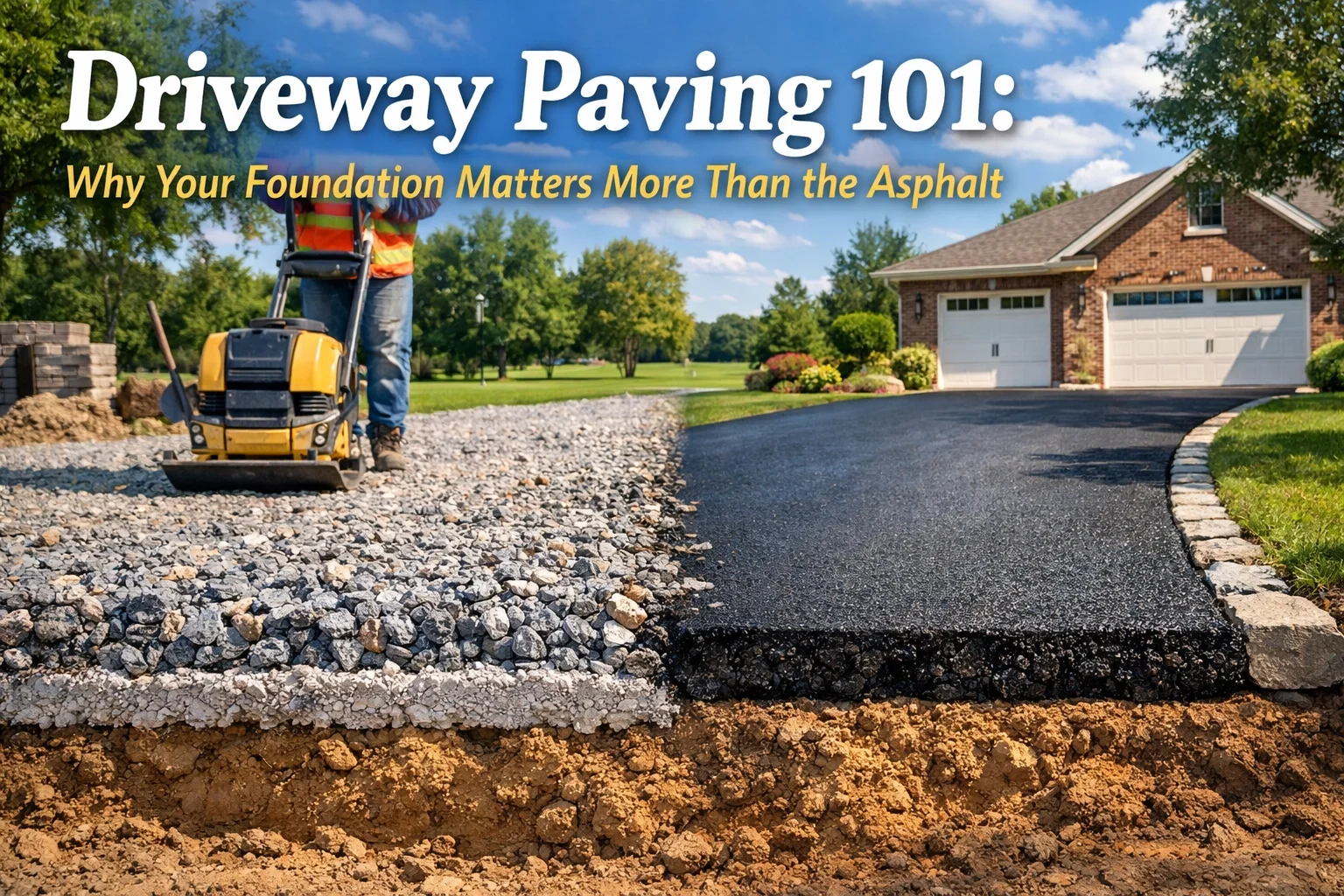
Driveway Paving 101: Why Your Foundation Matters More Than the Asphalt
Driveway Paving 101: Why Your Foundation Matters More Than the Asphalt
You've seen it before: a driveway that looked perfect two years ago is now cracking, sinking in spots, or developing those frustrating potholes that seem to multiply after every rainstorm. Maybe it's your neighbor's driveway. Maybe it's yours.
Here's what most homeowners and property developers don't realize when they're getting quotes: the asphalt you see isn't what determines how long your driveway lasts. It's everything underneath that matters.
At Pacific Asphalt and Excavation, we set the standard from the ground up, literally. And that means we spend more time talking about excavation and site preparation than we do about the smooth black surface everyone admires on day one. Because without a rock-solid foundation, even the highest-quality asphalt is just an expensive Band-Aid on a failing structure.
The Foundation Is Your Driveway's Structural Backbone
Think about building a house. You wouldn't skip the foundation and start with the roof, right? Same principle applies to driveways, but for some reason, this is where corners get cut most often.
Your foundation does three critical jobs:
Distributes weight evenly across the soil beneath, preventing concentrated stress that creates cracks and potholes
Manages water drainage by directing moisture away from the base, which is absolutely essential in our wet Pacific Northwest climate
Prevents shifting and settling that causes those telltale dips and depressions that make your driveway look decades older than it actually is
When we prepare a site, we're engineering a structural system that will handle thousands of pounds of vehicle weight, daily temperature swings, and seasonal moisture changes. The asphalt on top? That's basically the protective coating for all the real work happening below.
What Actually Goes Into a Proper Foundation
A legitimate paving contractor (and excavation contractor) builds your driveway foundation in layers, and each one matters.
Soil Evaluation and Preparation
Before we place a single stone, we evaluate your existing soil. Clay-heavy soil? Silty conditions? Poor drainage areas? Each situation requires a different approach. Sometimes we need to excavate deeper and replace problem soil. Other times we'll add geotextile fabric to separate the native soil from the base material, preventing erosion and shifting over time.
Aggregate Base Layer
This is where the magic happens. We install 4–6 inches of compacted crushed stone or gravel, sometimes more if soil conditions demand it. This aggregate base is what actually carries the load of your vehicles and distributes that weight across a broader surface area.
The key word here is compacted. Dumping gravel in a hole isn't a foundation. Proper compaction with the right equipment creates a dense, stable platform that won't shift under pressure.
Drainage Systems
Water is your driveway's worst enemy, especially in regions that experience freeze-thaw cycles. When moisture seeps into the base layer and freezes, it expands. When it thaws, it contracts. This constant movement tears pavement apart from the inside out.
We design proper slope and install drainage solutions during the foundation phase, not as an afterthought. Every driveway we build sheds water intentionally, directing it away from the structure.
Why Cheap Paving Jobs Fail Fast
We've repaired enough failing driveways to recognize the pattern. Here's what happens when a paving contractor skips proper excavation and site preparation:
Inadequate Base Thickness
They might lay 2–3 inches of aggregate when 5–6 inches are needed for your soil type and expected traffic load. Saves them time and material costs. Costs you thousands in repairs within three years.
Poor Compaction
Running a compactor over the base once or twice isn't the same as achieving proper density. Without adequate compaction, the base settles unevenly after installation, and your beautiful new asphalt settles right along with it. Uneven surfaces, standing water, accelerated deterioration.
No Drainage Consideration
Some contractors just follow existing grade without analyzing where water will actually flow. If your driveway naturally collects water, it needs engineered drainage, period.
Skipping Soil Stabilization
Problem soils don't magically become stable just because you covered them with gravel. If the native soil is weak, compressible, or poorly draining, it needs to be addressed during excavation or your entire foundation becomes compromised.
The Pacific Asphalt and Excavation Difference: Setting the Standard From the Ground Up
When we quote a driveway paving project, you'll notice we spend a lot of time talking about excavation. That's intentional.
We start every project with thorough site evaluation. Soil conditions, drainage patterns, existing substrate, expected vehicle loads, all of it gets assessed before we even schedule equipment. Because the foundation we design for a residential driveway in a low-traffic area looks different from what we'd engineer for a property developer's multi-unit project with daily delivery trucks.
Our excavation contractors aren't just moving dirt. They're preparing a stable platform engineered for your specific conditions and long-term performance requirements.
We use proper base materials, not whatever's cheapest at the moment, and we compact in layers with the right equipment. Every base layer gets checked for density and grade before we move to the next phase.
And we build drainage into the design from the beginning. Proper slope, edge drains where needed, sub-base permeability, all calculated to keep moisture moving away from your driveway's foundation.
This is what "setting the standard from the ground up" actually means. It's not marketing language. It's how we work.
The Real Cost of Cutting Foundation Corners
Let's talk numbers for a minute.
A properly installed driveway foundation might add 15–20% to your upfront project cost compared to a bare-bones installation. Seems significant until you consider the alternative.
Scenario A: Proper Foundation
Initial investment: Higher upfront cost
Lifespan: 20–30+ years with basic maintenance
Major repairs needed: Minimal, mostly surface sealcoating
Total cost over 30 years: Initial investment + routine maintenance
Scenario B: Cheap Foundation
Initial investment: Lower upfront cost
Lifespan: 5–8 years before major problems develop
Major repairs needed: Extensive patching, total replacement after 10–15 years
Total cost over 30 years: Initial investment + multiple repair cycles + full replacement
Most homeowners and property developers who've lived through Scenario B become very interested in proper foundation work for their next project. Unfortunately, by then they've already paid twice for the same driveway.
When to Prioritize Foundation Investment
You absolutely need a top-tier foundation if:
Your property has poor soil conditions, clay-heavy, silty, or areas with known settling issues
You're in a wet climate (hello, Pacific Northwest) where water management is critical
The driveway will handle heavy vehicles: delivery trucks, RVs, construction equipment
You're planning to keep the property long-term and want infrastructure that lasts
The existing substrate is unstable or you're building on new fill
In these situations, partnering with an excavation contractor who understands site preparation isn't optional. It's the difference between a driveway that performs for decades and one that becomes a maintenance headache within five years.
Questions to Ask Your Paving Contractor
Before you sign any contract, make sure you're working with a contractor who takes foundation seriously:
How will you evaluate my soil conditions before starting work?
What base thickness do you recommend for my specific site and usage?
What compaction equipment will you use, and how will you verify proper density?
How will you address drainage to prevent water infiltration?
Can you show me examples of your excavation and site preparation work, not just finished asphalt?
If a contractor can't give you detailed answers about foundation and site preparation, that tells you where their priorities lie. And it's probably not on building something that lasts.
Ready to Build It Right?
At Pacific Asphalt and Excavation, we're proud to be your excavation contractor and paving partner: in that order. We know that stunning asphalt starts with what you can't see.
Whether you're a homeowner planning a residential driveway or a property developer managing a commercial site, we bring the same commitment to foundational excellence. We evaluate your site properly, engineer the right solution, and execute with the equipment and expertise that proper excavation and base preparation require.
Because when you set the standard from the ground up, everything built on top performs exactly as it should.
Want to talk about your driveway project? Let's discuss your site conditions and design a foundation that will actually last. We promise to spend as much time talking about what goes under your driveway as what goes on top of it.
That's just how we work.
You've seen it before: a driveway that looked perfect two years ago is now cracking, sinking in spots, or developing those frustrating potholes that seem to multiply after every rainstorm. Maybe it's your neighbor's driveway. Maybe it's yours.
Here's what most homeowners and property developers don't realize when they're getting quotes: the asphalt you see isn't what determines how long your driveway lasts. It's everything underneath that matters.
At Pacific Asphalt and Excavation, we set the standard from the ground up, literally. And that means we spend more time talking about excavation and site preparation than we do about the smooth black surface everyone admires on day one. Because without a rock-solid foundation, even the highest-quality asphalt is just an expensive Band-Aid on a failing structure.
The Foundation Is Your Driveway's Structural Backbone
Think about building a house. You wouldn't skip the foundation and start with the roof, right? Same principle applies to driveways, but for some reason, this is where corners get cut most often.
Your foundation does three critical jobs:
Distributes weight evenly across the soil beneath, preventing concentrated stress that creates cracks and potholes
Manages water drainage by directing moisture away from the base, which is absolutely essential in our wet Pacific Northwest climate
Prevents shifting and settling that causes those telltale dips and depressions that make your driveway look decades older than it actually is
When we prepare a site, we're engineering a structural system that will handle thousands of pounds of vehicle weight, daily temperature swings, and seasonal moisture changes. The asphalt on top? That's basically the protective coating for all the real work happening below.
What Actually Goes Into a Proper Foundation
A legitimate paving contractor (and excavation contractor) builds your driveway foundation in layers, and each one matters.
Soil Evaluation and Preparation
Before we place a single stone, we evaluate your existing soil. Clay-heavy soil? Silty conditions? Poor drainage areas? Each situation requires a different approach. Sometimes we need to excavate deeper and replace problem soil. Other times we'll add geotextile fabric to separate the native soil from the base material, preventing erosion and shifting over time.
Aggregate Base Layer
This is where the magic happens. We install 4–6 inches of compacted crushed stone or gravel, sometimes more if soil conditions demand it. This aggregate base is what actually carries the load of your vehicles and distributes that weight across a broader surface area.
The key word here is compacted. Dumping gravel in a hole isn't a foundation. Proper compaction with the right equipment creates a dense, stable platform that won't shift under pressure.
Drainage Systems
Water is your driveway's worst enemy, especially in regions that experience freeze-thaw cycles. When moisture seeps into the base layer and freezes, it expands. When it thaws, it contracts. This constant movement tears pavement apart from the inside out.
We design proper slope and install drainage solutions during the foundation phase, not as an afterthought. Every driveway we build sheds water intentionally, directing it away from the structure.
Why Cheap Paving Jobs Fail Fast
We've repaired enough failing driveways to recognize the pattern. Here's what happens when a paving contractor skips proper excavation and site preparation:
Inadequate Base Thickness
They might lay 2–3 inches of aggregate when 5–6 inches are needed for your soil type and expected traffic load. Saves them time and material costs. Costs you thousands in repairs within three years.
Poor Compaction
Running a compactor over the base once or twice isn't the same as achieving proper density. Without adequate compaction, the base settles unevenly after installation, and your beautiful new asphalt settles right along with it. Uneven surfaces, standing water, accelerated deterioration.
No Drainage Consideration
Some contractors just follow existing grade without analyzing where water will actually flow. If your driveway naturally collects water, it needs engineered drainage, period.
Skipping Soil Stabilization
Problem soils don't magically become stable just because you covered them with gravel. If the native soil is weak, compressible, or poorly draining, it needs to be addressed during excavation or your entire foundation becomes compromised.
The Pacific Asphalt and Excavation Difference: Setting the Standard From the Ground Up
When we quote a driveway paving project, you'll notice we spend a lot of time talking about excavation. That's intentional.
We start every project with thorough site evaluation. Soil conditions, drainage patterns, existing substrate, expected vehicle loads, all of it gets assessed before we even schedule equipment. Because the foundation we design for a residential driveway in a low-traffic area looks different from what we'd engineer for a property developer's multi-unit project with daily delivery trucks.
Our excavation contractors aren't just moving dirt. They're preparing a stable platform engineered for your specific conditions and long-term performance requirements.
We use proper base materials, not whatever's cheapest at the moment, and we compact in layers with the right equipment. Every base layer gets checked for density and grade before we move to the next phase.
And we build drainage into the design from the beginning. Proper slope, edge drains where needed, sub-base permeability, all calculated to keep moisture moving away from your driveway's foundation.
This is what "setting the standard from the ground up" actually means. It's not marketing language. It's how we work.
The Real Cost of Cutting Foundation Corners
Let's talk numbers for a minute.
A properly installed driveway foundation might add 15–20% to your upfront project cost compared to a bare-bones installation. Seems significant until you consider the alternative.
Scenario A: Proper Foundation
Initial investment: Higher upfront cost
Lifespan: 20–30+ years with basic maintenance
Major repairs needed: Minimal, mostly surface sealcoating
Total cost over 30 years: Initial investment + routine maintenance
Scenario B: Cheap Foundation
Initial investment: Lower upfront cost
Lifespan: 5–8 years before major problems develop
Major repairs needed: Extensive patching, total replacement after 10–15 years
Total cost over 30 years: Initial investment + multiple repair cycles + full replacement
Most homeowners and property developers who've lived through Scenario B become very interested in proper foundation work for their next project. Unfortunately, by then they've already paid twice for the same driveway.
When to Prioritize Foundation Investment
You absolutely need a top-tier foundation if:
Your property has poor soil conditions, clay-heavy, silty, or areas with known settling issues
You're in a wet climate (hello, Pacific Northwest) where water management is critical
The driveway will handle heavy vehicles: delivery trucks, RVs, construction equipment
You're planning to keep the property long-term and want infrastructure that lasts
The existing substrate is unstable or you're building on new fill
In these situations, partnering with an excavation contractor who understands site preparation isn't optional. It's the difference between a driveway that performs for decades and one that becomes a maintenance headache within five years.
Questions to Ask Your Paving Contractor
Before you sign any contract, make sure you're working with a contractor who takes foundation seriously:
How will you evaluate my soil conditions before starting work?
What base thickness do you recommend for my specific site and usage?
What compaction equipment will you use, and how will you verify proper density?
How will you address drainage to prevent water infiltration?
Can you show me examples of your excavation and site preparation work, not just finished asphalt?
If a contractor can't give you detailed answers about foundation and site preparation, that tells you where their priorities lie. And it's probably not on building something that lasts.
Ready to Build It Right?
At Pacific Asphalt and Excavation, we're proud to be your excavation contractor and paving partner: in that order. We know that stunning asphalt starts with what you can't see.
Whether you're a homeowner planning a residential driveway or a property developer managing a commercial site, we bring the same commitment to foundational excellence. We evaluate your site properly, engineer the right solution, and execute with the equipment and expertise that proper excavation and base preparation require.
Because when you set the standard from the ground up, everything built on top performs exactly as it should.
Want to talk about your driveway project? Let's discuss your site conditions and design a foundation that will actually last. We promise to spend as much time talking about what goes under your driveway as what goes on top of it.
That's just how we work.